
Symbiosis Announces New Carbon Offtake Agreements with Thryve.Earth
The deal represents Symbiosis Coalition’s first agroforestry project and will restore 6,000 hectares in Sulawesi, Indonesia.
Today, Symbiosis Coalition announced long-term agreements to purchase carbon removal from Thryve.Earth, an organization developing high-integrity, nature-based carbon projects in South and Southeast Asia. Through their agreements, Symbiosis members Google and McKinsey have collectively contracted 335,000 tonnes of carbon removal from Thryve.Earth over 10 years. The project – Symbiosis Coalition’s first in agroforestry – will restore degraded land in Sulawesi, Indonesia, by planting productive fruit and timber trees that store carbon while generating real, lasting income for local communities.
Agroforestry projects have the potential to store an estimated 1.1 to 2.6 billion tonnes of carbon globally, and deliver benefits that go well beyond carbon removal. Integrating a mix of trees and crops, these projects range in size and scale from ones that engage thousands of smallholder farmers to medium-to-large-sized farms. A key strength of agroforestry projects is that, when designed well, they can reduce the risk of displacing harmful activity to other areas, with the potential to reduce degradation and deforestation pressure on nearby forests. This is due to the fact that these projects lead to better soil health, improved water retention, and greater biodiversity, creating more productive lands. Farmers and landowners generate income from both farming and carbon revenue, which means that the financial incentives to maintain and grow the system are built in from the start.
Restoring rainforests in Sulawesi
Sulawesi, Indonesia, is one of the most biodiverse and carbon-rich regions on Earth. Its tropical rainforests have been significantly degraded due to a combination of shifting agriculture, soil erosion, and invasive species. Thousands of hectares once blanketed in biodiverse forests are now unruly patchworks of invasive and fire-prone grasses, with smallholder farmers struggling to support their livelihoods with increasingly depleted soils.
Thryve’s agroforestry model aims to restore these landscapes overrun by invasive grasses with a mixed crop farming system that sequesters carbon, replenishes soils, reduces fire risk, and increases biodiversity and income for local farmers. The model includes an upper tree canopy of sugar palm plants and timber trees, a mid-layer of papayas, avocado, coffee, and bananas, and ground-level annual crops such as chili and corn. It optimizes land productivity and diversifies farmers’ income across several crops with different harvest timelines. Crops like chili and corn can be harvested within 6 months, whereas banana and papaya produce in 12-18 months, and trees like sugar palm and durian provide a longer-term income source. Together, these income streams are significantly more valuable than the carbon revenues alone, aligning carbon sequestration benefits with economic incentives to maintain and expand the system over time.
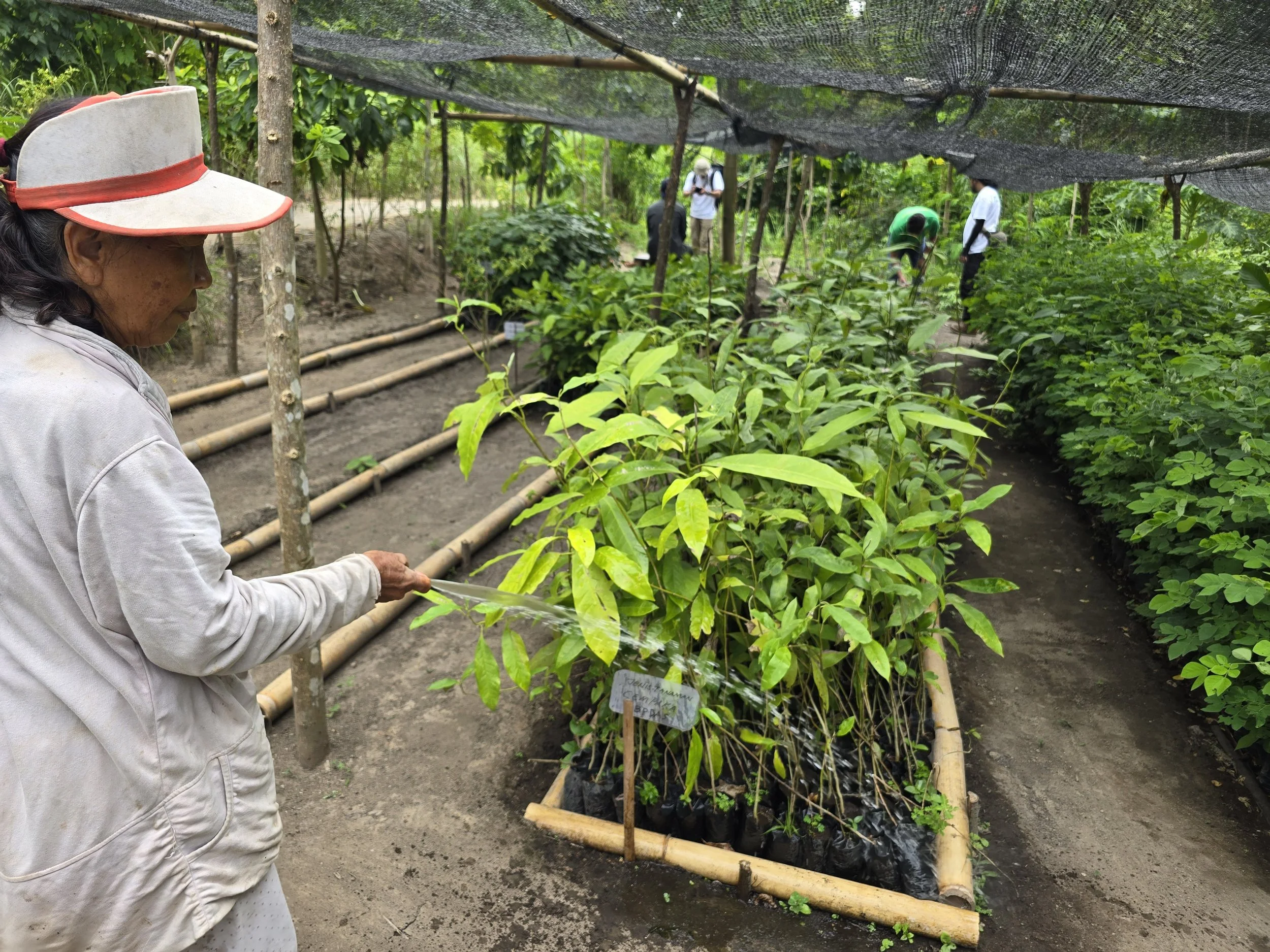
Photo Credit: Thryve.Earth
Carbon finance is critical to enabling this project to scale. The Thryve model builds off successfully tested models in Temboan in Sulawesi and in East Kalimantan; however, the upfront costs required to clear the existing invasive grasses and plant the new trees and crops prevent farmers from establishing and benefiting from these systems on their own. These models draw on decades of field experience from the Masarang Foundation, led by Dr. Willie Smits, a tropical ecologist, conservationist, and Ashoka Fellow whose work has demonstrated how degraded landscapes can be restored while creating sustainable livelihoods for local communities. Offtake agreements provide the volume and price certainty that project developers need to unlock the investment that will allow this project to scale to thousands of hectares of land.
The environmental benefits extend well beyond carbon. Previous projects using this model have led to expanded tree cover, improved soil health, and greater resilience to drought and fire within the first few years. In addition to farming income, the project also creates regular job opportunities for local community members to get the land ready – planting, nursery work, early maintenance, and clearing of invasive plants and fire-prone grasses, which must be done at regular intervals until the plantation establishes.
“The Thryve project demonstrates that positive community and ecological outcomes are not just co-benefits of high-integrity projects but importantly are co-drivers of success. The long-term offtakes from Symbiosis members give the Thryve team the certainty they need to build at scale, and that's exactly the kind of signal that unlocks this impact of this market and of projects like Thryve for people and planet,” said Julia Strong, Executive Director of Symbiosis Coalition.
"We started this project standing on the shoulders of giants who have done incredible work over decades, regenerating ecology and serving people. We are grateful to now scale such work in Sulawesi by bringing in institutional rigour and keeping stakeholders at the center of everything we do," said Vinay Kulkarni, Co-Founder and CEO of Thryve.Earth.
"Turning degraded grassland back into productive forest is, above all, an operational challenge. By pairing high-quality saplings and rigorous field protocols with verifiable monitoring of every hectare, we give our partners confidence that the carbon removals and community benefits are real, measurable, and built to last," said Ron Steinherz, Co-Founder and COO of Thryve.Earth.
Why Thryve?
The Thryve team brings strong carbon market expertise, technical knowledge, and a track record of building trusted partnerships with local organizations – most notably the Masarang Foundation, a local NGO with deep roots in North Sulawesi and decades of experience implementing projects in the region. The Masarang Foundation developed and tested the project's agroforestry model over decades, and they serve as a key partner to support the implementation of the project and capacity building for other partners. The combination of Thryve.Earth's capabilities and Masarang Foundation's proven track record in designing and implementing projects in the region instill confidence in the project's execution, quality, and durability.
The model also has meaningful potential to scale beyond this project. An agroforestry system anchored by high-value species like Arenga sugar palm, Mahogany, Jabon, and Durian could be replicated across up to 250,000 hectares of degraded land throughout Indonesia and Southeast Asia – regions with strong biomass growth and communities that could benefit from these agroforestry approaches.
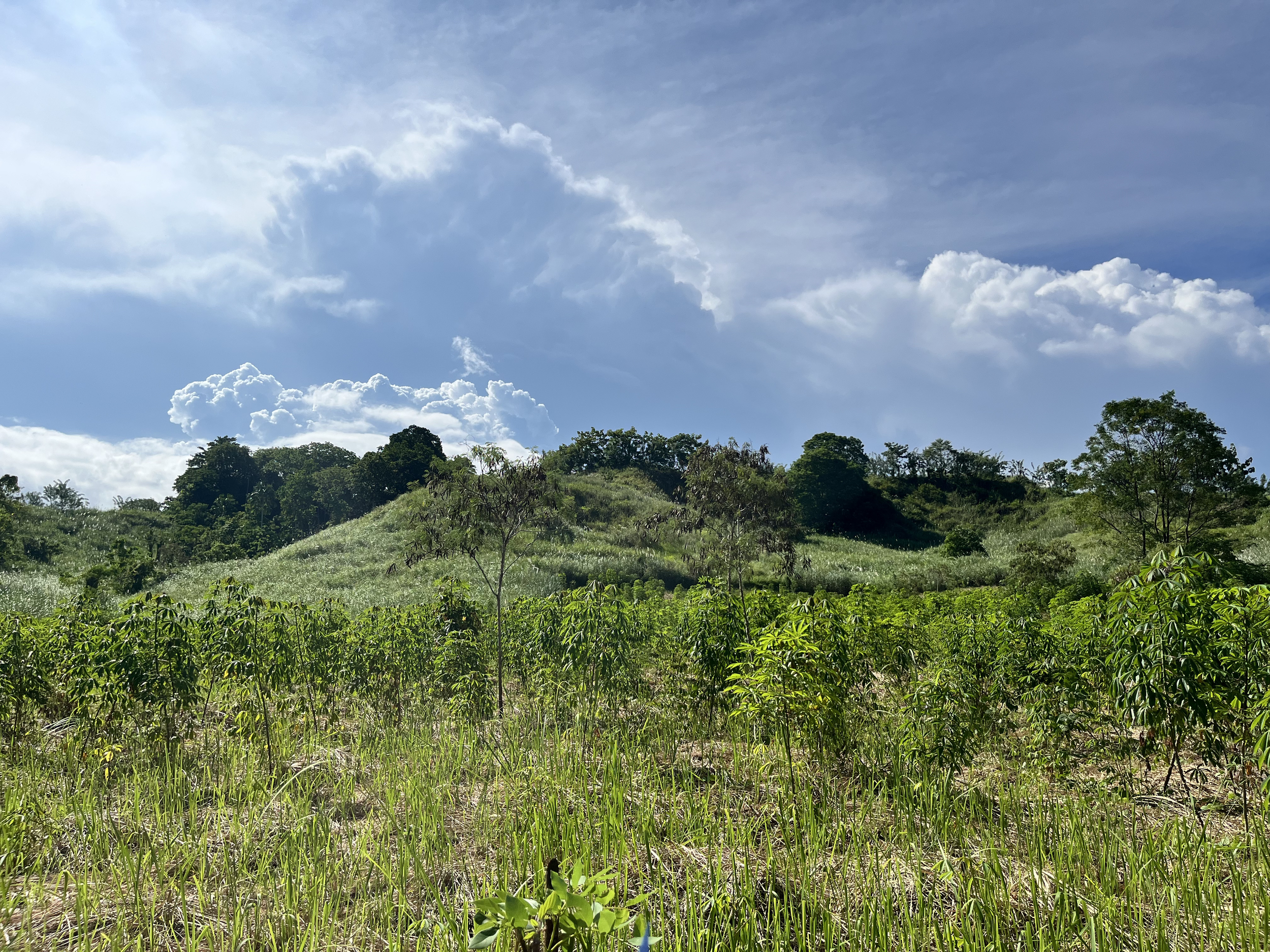
Photo Credit: Thryve.Earth
A portfolio built on integrity
This marks Symbiosis Coalition’s third project and its first in agroforestry, adding a new project type and new geography to its portfolio. Other projects include restoring degraded mine and agricultural lands in the Appalachian Region of the United States with Living Carbon, and restoring the Brazilian rainforest with Mombak. Each project reflects Symbiosis Coalition’s rigorous Quality Criteria and commitment to supporting high-integrity carbon removal projects – tailored to project type, geography, and economic and ecological context – that deliver real, measurable outcomes for the ecosystem and communities alike. Symbiosis continues to welcome new members and evaluate new projects to advance the nature-based carbon removal market.
For more information on joining Symbiosis, reach out to us at buyers@symbiosiscoalition.org.