
Symbiosis Announces New Carbon Offtake Agreements with Working Trees
Symbiosis Coalition's first silvopasture project; converting degraded cattle pasture in the Brazilian Amazon and Cerrado into productive, tree-covered ranchland
Symbiosis Coalition today announced long-term offtake agreements to purchase carbon removal from Working Trees, a company converting primarily degraded cattle pastures in Brazil into mixed-species silvopasture systems. Through their agreements, Symbiosis members Google and McKinsey have collectively contracted 320,000 tonnes of carbon removal from Working Trees over 10 years. The project represents Symbiosis Coalition's first silvopasture project with the offtakes restoring 8,700 hectares of degraded and semi-degraded pasture as part of a 50,000 hectare project across the southeastern Amazon and central Cerrado.
Cattle grazing is one of the most extensive agricultural land uses on Earth, covering nearly 3 billion hectares globally. It is also the leading cause of deforestation and forest fragmentation globally, and in some regions, a primary driver of soil degradation. Silvopasture is a type of agroforestry system that can help reduce that deforestation pressure and sequester meaningful volumes of carbon by purposefully integrating trees into degraded cattle pastures, restoring landscape connectivity, improving soil health and supporting better cattle outcomes on fewer hectares of land. Scientists estimate that silvopasture could remove between 0.3 and 1 billion tonnes of CO₂ annually worldwide, making it one of the most scalable nature-based solutions available.
Despite silvopasture’s climate potential, carbon-funded silvopasture has not yet been deployed at scale. Getting the model right requires several factors to line up: secure land tenure, favorable tree growing conditions, appropriate species selection, good accessibility conditions for large-scale planting, and strong local technical expertise to execute on the ground. Working Trees designed its project with these factors in mind and has already demonstrated it can deliver, having piloted the approach across more than 2,000 hectares.
“Silvopasture is one of the most underused tools we have for nature-based carbon removal, and what excites us about the Working Trees project is how much room there is to scale it. Working Trees' project is sequestering carbon while also improving the land that communities rely on. That's the kind of outcome we strive for at Symbiosis, real climate impact that supports the livelihoods of the communities this project touches while thinking holistically about landscape-level impacts that last,” said Julia Strong, Executive Director of Symbiosis Coalition.
"Our mission at Working Trees is to mobilize the next generation of cattle ranching – where producers and nature thrive together – by partnering with ranchers to deploy silvopasture at the million-hectare scale. However, landscape-level change is not built on one-off transactions. It takes long-term partners on both sides - ranchers who commit to decades of restoration activities and buyers who commit to funding that behavior change. The Symbiosis Coalition is that kind of critical long-term partner, and we're proud to build alongside them to improve livelihoods, regenerate pasturelands, and mitigate climate change," said Leif Gonzales-Kramer, CEO of Working Trees.
Silvopasture in practice
The Working Trees project will plant rows of commercial timber and native trees directly into existing cattle pasture, leaving space between the rows for cattle to graze. The trees get enough sunlight to grow, while also giving the cattle much-needed shade. The trees also help restore soil health, improve water retention, increase biodiversity, and make pastureland and cattle more resilient to drought and disease, all of which support healthier, more productive grazing land. This leads to better cattle outcomes on fewer hectares of land. The model also aims to avoid leakage by design, a common risk in reforestation projects where ranching or other land uses get pushed elsewhere, since the ranching here stays in place rather than being displaced.
Working Trees’ project design includes a combination of native species, including Cañafistula (Peltophorum dubium), Ingá (Inga spp.), Goncalo Alves (Astronium fraxinifolium), and Baru (Dipteryx alata), alongside non-native, commercial timber species like African Mahogany (Khaya ivorensis and K. senegalensis) and Teak (Tectona grandis). Each species has a specific purpose: African Mahogany and Teak, well-known to landowners, are non-invasive, desirable commercial species, and they grow on a predictable schedule. Decades of research means their growth – and therefore the carbon they store – can be estimated with confidence. The timber revenue from these species gives landowners a real long-term reason to maintain silvopasture systems instead of turning the land back into pasture after carbon revenue ends. At the same time, these harvest cycles are incorporated into the ongoing carbon quantification from the project to ensure accurate accounting of carbon accumulation over time.
The native species naturally enrich the soil with nitrogen, provide nuts for domestic markets, and offer alternative forage for cattle, generating economic and ecological benefits for the farmland and overall ecosystem. Working with Brazilian research institutes, the goal of the program is to go from a minimum of 25 percent native species to 50 percent native species by 2030. This approach, combining native and non-native species, supports two of Symbiosis’ Quality Pillars: ecological integrity and social and community benefits. The native species enhance biodiversity while avoiding adverse environmental impact, and the commercial species provide a long-term financial benefit to the landowners whose buy-in and support for the project are crucial to its ongoing success.
"Using a mix of native and non-native tree species can be the right approach for designing projects that are both durable and ecologically positive. Fast-growing non-native species can provide early biomass accumulation and economic returns, while native species contribute long-lived, dense-wood carbon stocks that enhance the permanence of climate benefits. A diversified species mix also enables multiple harvest cycles and a broader range of products, including non-timber forest products. Notably, native trees help projects move beyond a 'carbon-only' objective by supporting local biodiversity, habitat quality, and wider ecosystem resilience," said Daniel Piotto, Associate Professor of Dendrology at the Federal University of Southern Bahia, Brazil, and Symbiosis Coalition Technical Advisory Board Member.
"Scaling high-integrity nature-based carbon removal is an essential part of our sustainability strategy. By supporting Working Trees' silvopasture model, we are backing a replicable approach to sustainable land use, unlocking large carbon sinks while strengthening the resilience of local economies," said Isabelle Schuhmann, Global Director of Environmental Sustainability, McKinsey & Company
“This partnership represents a significant leap forward for high-integrity, natural climate solutions. Cattle grazing is one of the most dominant land uses globally; by integrating trees directly onto active pastures, Working Trees demonstrates that we don't have to choose between food production and ecological restoration. It's a scalable, tech-driven approach that benefits both global carbon removal and local farming livelihoods,” said Randy Spock, Head of Carbon Removal at Google.
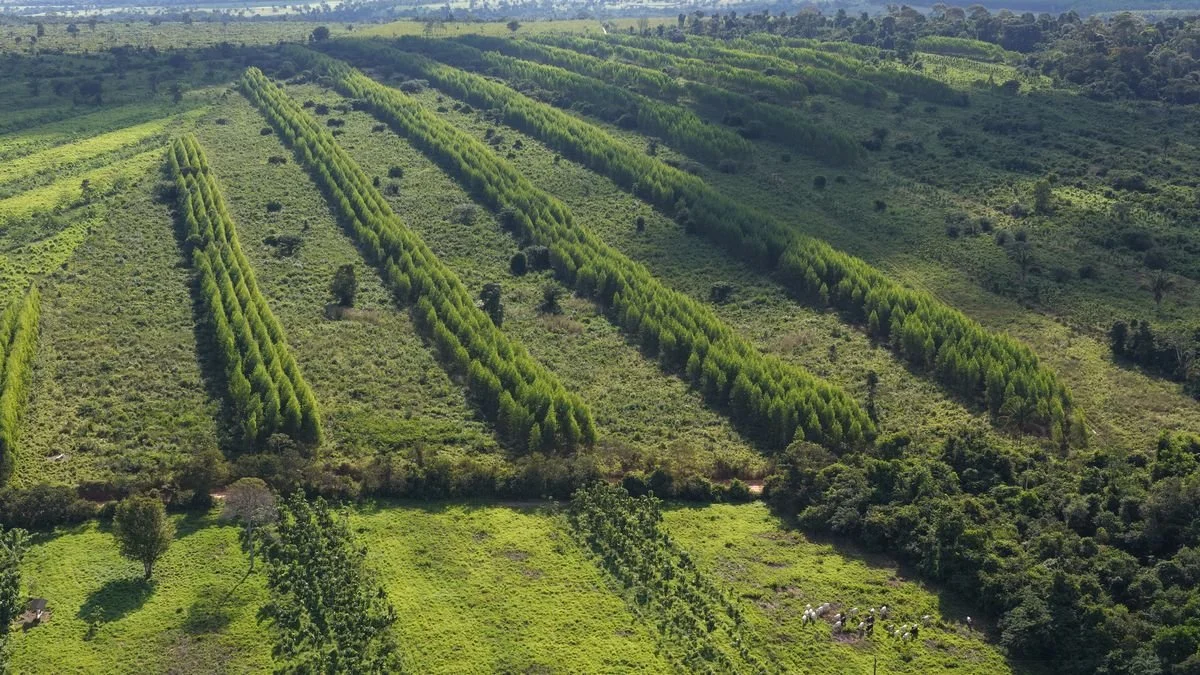
Silvopasture in progress (Credit: Working Trees)
Why Working Trees?
Working Trees’ model was attractive to Symbiosis because it is strategically designed to fit the local social and ecological context, and to be scalable across the Cerrado and southeastern Amazon regions in Brazil. The approach has the potential to scale to between 5 and 10 million hectares of pastureland. This deal is an early step toward that larger opportunity, unlocking a replicable, financially self-sustaining model for turning one of the world's most prolific drivers of land degradation into a durable source of carbon removal, without asking ranchers to give up their livelihoods to get there.
Working Trees’ leadership brings experience in sustainable agriculture and scaling agricultural products across millions of farmers in emerging markets, supported by senior, locally-based teams with decades of experience in agricultural commercialization.
The team is using accessible smart phones and an integrated digital monitoring platform to make carbon measurement faster, more scalable, and more transparent, without sacrificing accuracy. Instead of relying solely on labor-intensive field measurements, the project also uses a smartphone-based system that enables landowners and field workers to capture tree location, size, and species using their phone cameras, after which the data can be transferred to the digital monitoring platform built by Working Trees.The technology has been peer-reviewed and independently validated to achieve accurate results compared to manual measurements, and each record automatically includes photos, GPS coordinates, and timestamps, creating an auditable and transparent trail for carbon verification.
Shining a light on high-integrity nature-based carbon removal
This is Symbiosis Coalition's first project in silvopasture, alongside conservation-oriented reforestation projects with Living Carbon and Mombak, and an agroforestry project with Thryve.Earth. Symbiosis is spotlighting high-integrity, replicable project designs that represent the pathways with the greatest potential to meet the scale of the climate challenge, across different geographies and approaches. Each project reflects Symbiosis Coalition's rigorous Quality Criteria, tailored to project type, geography, and economic and ecological context, but built around the same goal: real, measurable, and durable outcomes for both ecosystems and communities.
Symbiosis aims to do for nature what Power Purchase Agreements (PPAs) did for clean energy: unlock the project finance needed for scale by aggregating buyer demand into long-term offtake agreements that give developers and investors the certainty needed to scale high-integrity projects. To do so, Symbiosis identifies potential projects, conducts the full diligence process, and facilitates the offtake agreements for buyers, making it easier for buyers to buy, developers to secure offtakes, and investors to provide project financing.
Symbiosis continues to welcome new members and announce offtake agreements with new projects to advance the nature-based carbon removal market. For more information on joining Symbiosis, reach out to us at buyers@symbiosiscoalition.org.